
The Catron County Most Wanted Program
Catron County has no sheriff's most-wanted program on public display. The Sheriff's Office page offers public information and ways to make contact, but it publishes no named list, no reward policy, and no tip channel. That gap says nothing about the county's active warrants. Arrest warrants and open investigations still exist without a roster. The court, not a web page, controls each warrant's status. For non-emergency calls for service, the Sheriff answers at 575-533-6222; administrative and other business goes to 575-533-6301, and the office sits at 100 Main Street in Reserve.
How Catron County Most-Wanted Lists Work
Most-wanted lists, where they exist, are hand-picked public-safety features. They never show a full active-warrant database, and they are not the court's case file. Catron County publishes no local list, so there is no update schedule or selection rule to explain. A third-party list is a poor substitute. Copied names can be wrong, stale, protected, or belong to someone else entirely. Describe the official channel and use it. The official Sheriff page is where any future local notice would appear. The federal court contact page covers a separate jurisdiction.
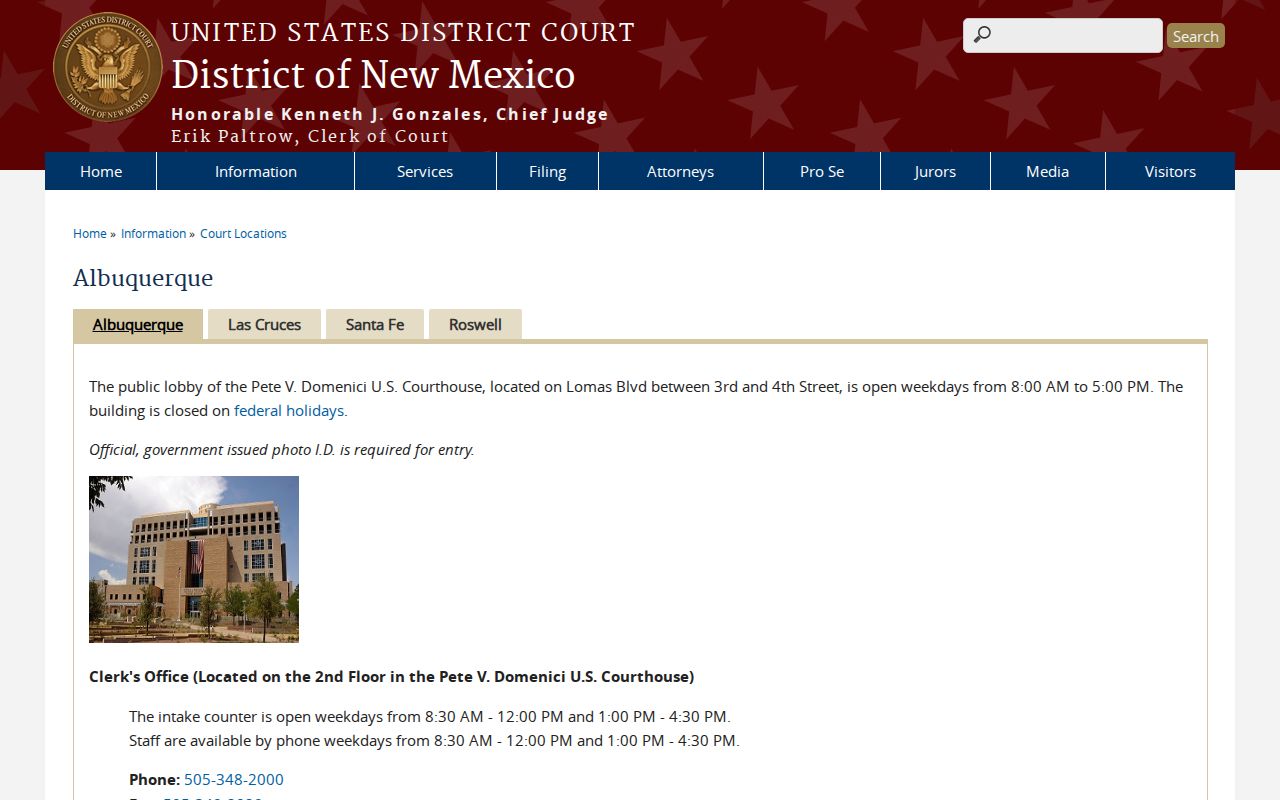
That federal page is not a Catron County roster. It identifies no local warrant.
Catron County Most-Wanted Tip Safety
Catron County runs no local Crime Stoppers partnership, reward process, or tip line. In an emergency, call 911. For a non-emergency law-enforcement concern, use the Sheriff's contact route and ask where your information belongs. If the worry is your own case, call the issuing court rather than posting publicly.
Safe route: Use official contact information, share only what the receiving office asks for, and do not publish a person’s private details or a copied roster.
The Sheriff lists a public email for Keith Hughes in his official role. Catron County does not present it as a tip channel. Ask the office before sending anything sensitive.
Catron County Most-Wanted vs Active Warrant
A most-wanted list and an active warrant answer different questions. One is a communications tool an agency may choose to publish. A warrant is a court status in Catron County, held by the issuing court and its systems.
| Topic | Most-wanted list | Active warrant |
|---|---|---|
| Scope | Selected public-safety entries | Court process treated as outstanding |
| Owner | Publishing agency, if one exists | Issuing court controls status |
| Public source | Official agency page only | Case access plus court confirmation |
| Next step | Use the agency’s verified contact route | Call the issuing court before acting |
Why Catron County Has No Most-Wanted Roster
The Sheriff's navigation, county news, the court finder, and public-access routes turn up no official Catron County roster. The county news channel announces no roundup, amnesty event, or most-wanted notice either. That is an access fact, not a claim about how many warrants the county holds. It is also why names, photos, and mugshots from other sources do not belong here. Check official notices instead. The Court Operations events page lists statewide program events.
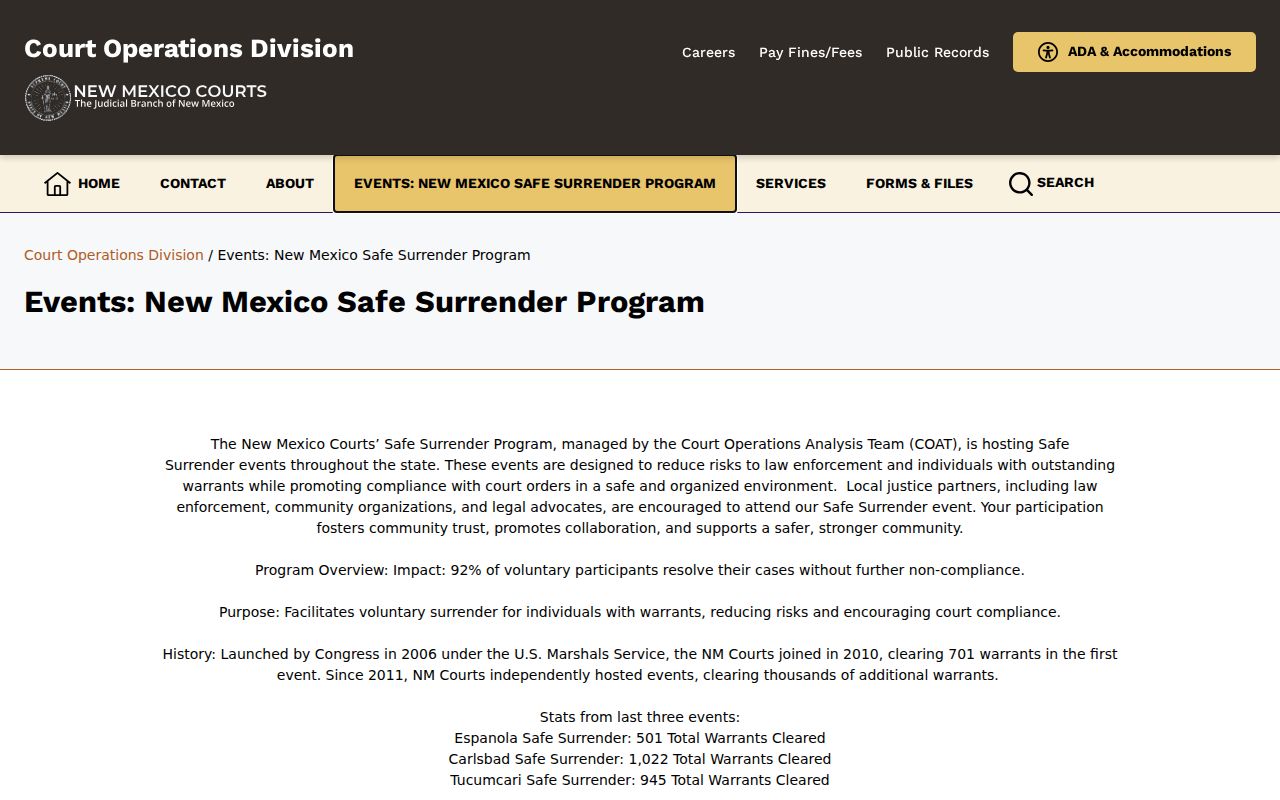
The program image describes statewide event information, not a Catron list.
Catron County Most-Wanted List Concerns
Never approach a person, argue in a comment thread, or treat a copied list as proof of anything. Talk to a lawyer if you need one. Then ask the Catron County issuing court whether a case or warrant exists and what its status is today. The Sheriff can explain law-enforcement process, but recall, bond, and appearance terms belong to the court.
Verify first: A name match on an unofficial page is not court confirmation. Use the court named in the case and the official Sheriff channels.
New Mexico public access sends anyone with an active warrant or unpaid obligation back to the court. Payment clears only the financial part.
Catron County Most-Wanted and Safe Surrender
New Mexico Courts runs Safe Surrender, a program of organized voluntary resolution events. Official notices name communities like Gallup, Carlsbad, and Tucumcari. Catron County hosts no such event. A statewide program is useful context, but an out-of-county notice is neither a local warrant list nor a reason to travel. Read the current Court Operations notices and call the issuing court first. No immunity, automatic release, or guaranteed recall applies unless an official notice says so.
Catron County Warrant and Federal Programs
The U.S. Marshals Service District of New Mexico works with partner agencies to find and arrest state and federal fugitives. It posts no Catron County roster and replaces no county court. Federal court records also sit in a separate system, apart from New Mexico Case Lookup. For a federal matter, use official federal court contacts and the federal court's scam warning. For a Catron County state warrant, call the issuing New Mexico court and use the Sheriff for the law-enforcement side.
Catron County Warrant Records and Rosters
Need a specific public record? New Mexico Courts IPRA or the Catron Sheriff open-records form may cover it, depending on the record. A court request should name the court, the case, the document type, and a date range. The Sheriff's form asks for incident, audio, blotter, agency, date, time, location, case number, and officer fields. IPRA does not override juvenile, sealed, protected, or confidential limits. No one should request or publish an unlimited file on a private person.
The Honest Catron County Most-Wanted Answer
Catron County posts no public most-wanted roster. The Sheriff's own page is the spot to watch for any future notice. To confirm a named concern, call the issuing court. A Catron County warrant search covers the wider case check, and the court can then settle it.
- Roster
- A published list of selected names; none was located in the official Catron sources reviewed.
- Active warrant
- A court process shown as outstanding; confirm with the issuing court.
- Safe Surrender
- A New Mexico Courts program for organized voluntary resolution events.
- IPRA
- New Mexico’s public-records request law, subject to exceptions.